ADHD Symptoms: It’s More Than Just Being Distracted
When people hear the word ADHD, or Attention-Deficit/Hyperactivity Disorder,
they often imagine someone who cannot sit still or constantly loses focus.
But ADHD is much more complex than that.
This article is for educational purposes only and is not a diagnosis.
If you think you may have ADHD, consult a qualified healthcare professional
for a proper assessment.
Quick Summary
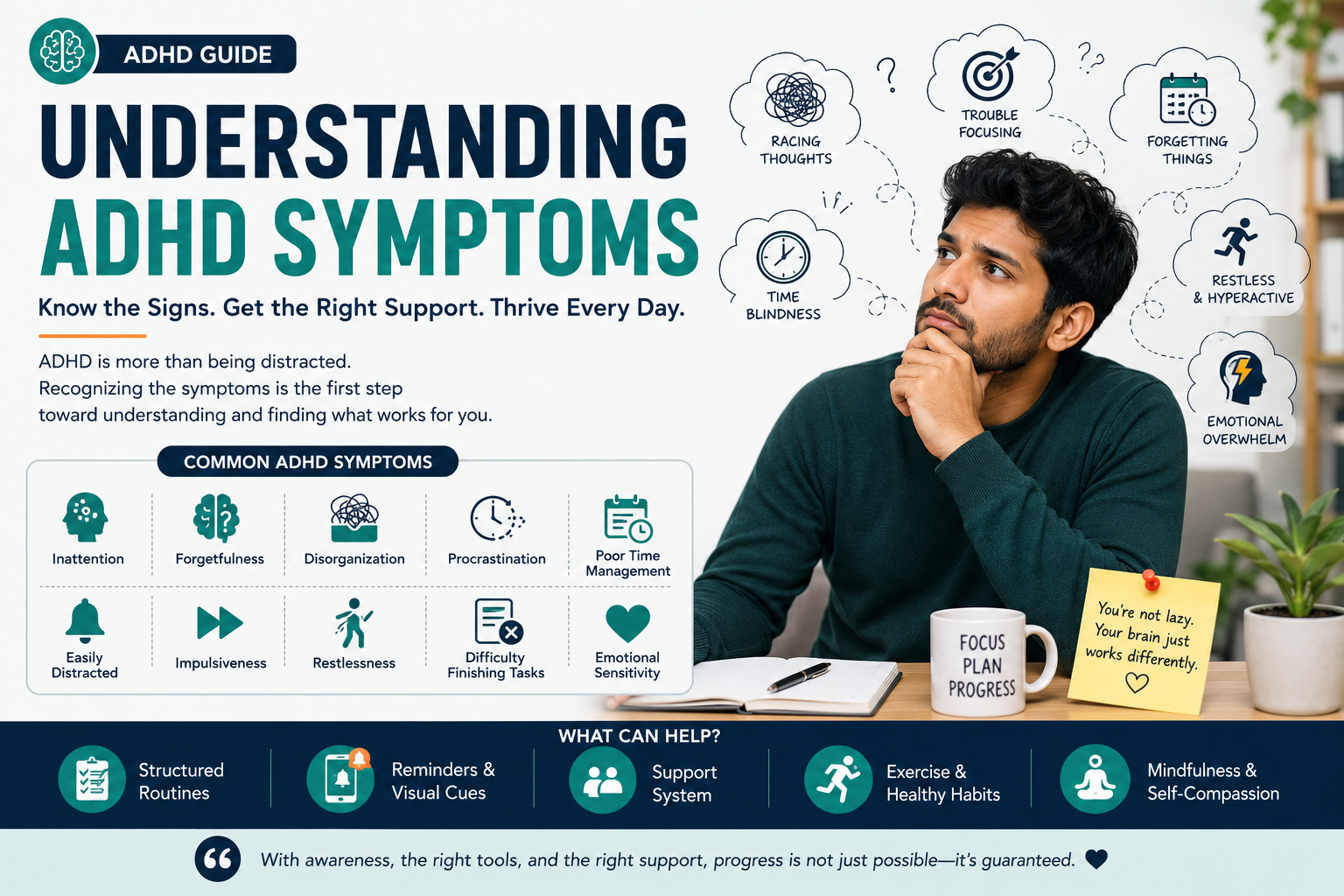
People with ADHD commonly experience:
- Difficulty paying attention
- Forgetfulness
- Procrastination
- Poor time management
- Restlessness
- Impulsiveness
- Emotional overwhelm
- Trouble completing tasks
- Frequent distractions
- Difficulty staying organized
Not everyone experiences every symptom, and ADHD can look different
from person to person.
What Is ADHD?
ADHD is a neurodevelopmental condition that can affect executive
functioning, including planning, organization, prioritization,
attention, working memory, and self-regulation.
People with ADHD may know what they need to do but struggle to do it consistently.
The Three Main Types of ADHD
Predominantly Inattentive Type
- Easily distracted
- Forgetting daily tasks
- Losing important items
- Difficulty following conversations
- Frequently daydreaming
- Avoiding mentally demanding work
- Trouble finishing projects
This presentation may go unnoticed because obvious hyperactivity
may be minimal.
Predominantly Hyperactive-Impulsive Type
- Constant movement
- Difficulty sitting still
- Talking excessively
- Interrupting conversations
- Acting without thinking
- Feeling restless
- Impatience
Adults may experience hyperactivity more as internal restlessness
than obvious physical activity.
Combined Type
This presentation includes symptoms of both inattentiveness and
hyperactivity or impulsivity.
Common ADHD Symptoms
Difficulty Paying Attention
People with ADHD may miss important details, lose focus during
meetings, drift off while reading, reread paragraphs, or find
long conversations difficult to follow.
Forgetfulness
Forgetting appointments, deadlines, bills, keys, wallets,
phones, or daily responsibilities can be a common challenge.
Chronic Procrastination
A person may know that a task is important and still struggle
to begin it until the deadline becomes urgent.
Difficulty Finishing Tasks
People with ADHD may start multiple projects, become excited
about new ideas, and then struggle to maintain momentum.
Poor Time Management
Common challenges include lateness, underestimating how long
tasks will take, missing deadlines, and difficulty planning the day.
Easily Distracted
Notifications, conversations, environmental distractions,
or unexpected thoughts can interrupt concentration.
Hyperfocus
ADHD does not always mean an inability to focus. Some people
can become deeply absorbed in activities that are especially
interesting or rewarding to them.
Restlessness
Adults may experience leg shaking, finger tapping, difficulty
relaxing, or a persistent sense of internal restlessness.
Impulsiveness
Examples can include interrupting others, speaking before thinking,
impulse shopping, or making decisions without fully considering
the consequences.
Emotional Sensitivity
Some people with ADHD report strong emotional reactions,
frustration, difficulty calming down after conflict, or
reduced self-esteem after repeated challenges.
Disorganization
Cluttered workspaces, misplaced documents, missed paperwork,
and difficulty keeping track of belongings can create
additional stress.
Difficulty Following Through
Starting a project may be easier than consistently completing it.
This can leave tasks partially finished and become frustrating over time.
ADHD Looks Different in Adults
Many adults do not realize they have ADHD because they were never
diagnosed during childhood.
- Career instability
- Relationship difficulties
- Financial challenges
- Poor routines
- Burnout
- Feeling overwhelmed
- Low confidence despite being capable
Adults may also develop coping strategies that hide symptoms for years.
ADHD Symptoms in Children
Children with ADHD may experience:
- Excessive activity
- Talking frequently
- Interrupting teachers or classmates
- Forgetting homework
- Losing school supplies
- Difficulty sitting still
- Careless mistakes
- Daydreaming during class
Not every energetic child has ADHD. Diagnosis requires a comprehensive
assessment by an appropriately qualified healthcare professional.
Symptoms Often Mistaken for Laziness
People with ADHD may be told that they are lazy, irresponsible,
careless, or lacking discipline.
ADHD can affect attention, motivation, organization, and
self-regulation. Understanding these challenges can reduce shame
and encourage people to seek appropriate support.
When Should You Seek Help?
Consider speaking with a healthcare professional if symptoms:
- Have been present since childhood
- Affect work, school, or relationships
- Cause significant stress or frustration
- Interfere with daily life
- Persist despite efforts to stay organized
A qualified professional can assess whether ADHD or another condition
may be contributing to these difficulties.
What Helps People with ADHD?
There is no single solution that works for everyone. Depending on
individual needs, people may benefit from a combination of approaches.
- ADHD education
- Medication when prescribed by a healthcare professional
- Therapy or ADHD coaching
- Accountability support
- Daily routines
- Digital reminders
- Exercise
- Healthy sleep habits
- Breaking large tasks into smaller steps
- Time-blocking and calendars
ADHD Is Not a Lack of Intelligence
ADHD does not determine a person’s intelligence, potential,
creativity, or ability to succeed.
Many people with ADHD identify strengths such as creativity,
curiosity, problem-solving, resilience, high energy, and strong
interest in subjects they enjoy.
The goal is not to change who you are. The goal is to build systems
that make it easier to use your strengths effectively.
Final Thoughts
ADHD is more than occasional distraction or forgetfulness.
It can influence how people think, work, learn, and manage
everyday responsibilities.
Recognizing possible symptoms is an important first step toward
understanding your experiences and finding appropriate strategies.
With appropriate professional guidance, practical tools,
support, and self-awareness, many people with ADHD can manage
daily challenges and make steady progress toward their goals.
Frequently Asked Questions About ADHD Symptoms
Can ADHD symptoms change with age?
Yes. Hyperactivity may become less noticeable with age, while
difficulties with attention, organization, and time management
may become more prominent in adulthood.
Can adults be diagnosed with ADHD?
Yes. Many people receive an ADHD diagnosis during adulthood
after experiencing difficulties for years without knowing the cause.
Does everyone with ADHD have hyperactivity?
No. People with predominantly inattentive ADHD may not appear
physically hyperactive.
Can ADHD symptoms improve?
With appropriate treatment, practical strategies, healthy routines,
and ongoing support, many people learn to manage ADHD symptoms
more effectively.
Take the Next Step
If these symptoms sound familiar, consider speaking with a qualified
healthcare professional for an assessment.
Learning about ADHD is an important first step. Building practical
systems, seeking appropriate support, and understanding how your
brain works can help you make lasting changes.
ADHD does not define your potential. With the right strategies
and support, you can work with your brain instead of constantly
fighting against it.
“`
